14 September 2015: Taking ‘the strangers case’

Thomas More

Sir Thomas More. Hans Holbein the Younger, c.1527.

Tragically, when it comes to human behaviour there is little new under the sun. Despite all the evidence that immigration and the settling of refugees is good for a country’s soul, not to mention its economy, many people give in to bigotry and fear and make victims of those who are already desperate and vulnerable.

In 1517, young male apprentices rioted against foreigners living in London. Ultimately, large numbers of the rioters were arrested, and though most were pardoned a handful were executed.

The riot started on the evening of 30 April and carried over to the early hours of the next day. The event has since been known as Evil May Day or Ill May Day.

One of those who attempted to forestall any violence was Thomas More, who confronted the rioters and urged them to return to their homes.

Two playwrights, Anthony Munday and Henry Chettle, celebrated this act of courage in their play Sir Thomas More, written sometime in the early 1590s.

The play was revised by several writers, and it is now generally accepted that one of those was William Shakespeare.

Shakespeare rewrote Moore’s speech to the rioters when he implores them to take ‘the strangers case’, to imagine what it must be like to be a refugee facing at best a lack of compassion and at worst outright hostility.

“What country, by the nature of your error,
Should give you harbor? go you to France or Flanders,
To any German province, to Spain or Portugal,
Nay, any where that not adheres to England,—
Why, you must needs be strangers: would you be pleased
To find a nation of such barbarous temper,
That, breaking out in hideous violence,
Would not afford you an abode on earth,
Whet their detested knives against your throats,
Spurn you like dogs, and like as if that God
Owed not nor made not you, nor that the claimants
Were not all appropriate to your comforts,
But chartered unto them, what would you think
To be thus used? this is the strangers case;
And this your mountanish inhumanity.”

In 2015 there are many people – and some countries – who do indeed take on ‘the strangers case’, and open their hearts and homes to those fleeing terror and persecution.

But not all of us, and almost none of us all of  the time.

[The extract is taken from the text put up at Project Gutenberg.]

04 September 2015: Neither one thing nor the other

P. myojinensis

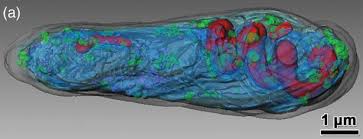
P. myojinensis. The blue structure is the nucleus, the red structures the endosymbionts.

A remarkable creature discovered in the ocean southeast of Japan – that doesn’t quite seem to belong to any of the three known domains – may provide evidence of how complex multicellular life evolved on Earth.

In 2010, a scientific expedition to the Myojin Knoll, about 35 kilometres southeast of the Japanese island of Aogashima, collected biological samples from a hydrothermal vent more than 1,200 metres below the surface.

The samples were frozen and then embedded in epoxy resin; the resin was then prepared for study by being sliced into ultrathin sections.

That’s when the researchers discovered they had collected one truly remarkable specimen, a single-celled organism that lays somewhere between prokaryotes, organisms like bacteria and archaea, and eukaryotes, the basis of complex organisms such as fungi, plants and … well … us.

The main differences between prokaryotes and eukaryotes are that the former do not have a nucleus surrounded by a membrane, or any membrane-bound organelles such as mitochondria or chloroplasts.

As described in the journal Microscopy, the cell, dubbed Parakaryon myojinensis, was discovered on one of the bristles of a type of Polychaete called a scale worm. It was 10 micrometres long and three wide, much larger than most bacteria. Inside the cell the researchers discovered a nucleus with a membrane. As well, they discovered three endosymbionts, organisms that live symbiotically inside another, also surrounded by membranes. Obviously, then, the cell was not a prokaryote.

However, the nucleus of P. myojinensis was surrounded by a single membrane and consisted of DNA fibres, whereas a nucleus in a eukaryote cell has a double membrane and consists of chromosomes.

The endosymbionts also had only a single membrane. Mitochondria in eukaryotes, like the nucleus, have a double cell wall. As well, the endosymbionts closely resembled bacteria rather than mitochondria.

This last point is what makes the discovery of P. myojinensis so important.

There are two major theories about how eukaryotes evolved. The autogenesis theory proposes that a eukaryote’s structures developed from primitive prokaryotic features. The symbiogenesis theory – first properly described by Russian Konstantin Mereschkowski in 1910 and subsequently advanced by Lynn Margulis in 1967 – proposes that eukaryotes evolved from a symbiotic relationship after a bacteria was absorbed by larger achaean, eventually becoming an integral and working part of the cell.

P. myojinensis seems to be an organism that has incorporated endosymbionts into its structure but not yet developed the full range of eukaryotic functions.

As the authors of the paper suggest, “ … it may even be a conservative descendant of the transitional lineage between prokaryotes and eukaryotes.”

For a fuller description of the possible implications of the discovery, read this article on ABC online by British scientist Nick Lane, whose latest book The Vital Question: Why is life the way it is?, is a rewarding and thought-provoking read.

20 August 2015: Shine on Pluto

global-mosaic-of-pluto-in-true-color

Pluto as seen by New Horizons. Image credit: NASA/JHUAPL/SwRI

AJ and I ducked out of the house on the night of August 11 to have a quick wine or two at King O’Malley’s pub in the city. When we got there we discovered the place had been invaded by Science in the Pub, and the two of us spent a pleasant hour drinking white wine, eating free food, and watching a slide show about the New Horizons mission to Pluto.

What’s more, it was a presentation hosted by John Berry, the American ambassador to Australia, and featured Nobel prize winner Brian Schmidt from the ANU, science communicator and astrophysicist Alan Duffy from Swinburne University of Technology, and Glen Nagle, Education and Outreach Manager at Canberra’s Deep Space Communication Complex at Tidbinbilla.

It was a pretty crowded affair and the screen was sometimes obscured by jostling customers, excited science addicts and through-traffic, but the mood was positive and the atmosphere … well … sciencey. (If this isn’t a word already, I bag naming rights.)

What follows are some of the amazing facts we learned about the New Horizons mission and Pluto, plus a few extra tidbits.

The mission was launched on 19 January 2006, when Pluto was still classified as a planet. Eight months later it was demoted to a dwarf planet. Furthermore, in 2006 only three moons had been identified orbiting Pluto. Before the probe reached its destination, we knew of five moons.

The probe’s closest approach to Pluto occurred nearly nine months after launch, on 14 July 2015, and after a journey of approximately 7.5 billion kilometres. Disappointingly, New Horizons was 7.5 seconds late for its appointment.

Still, not too bad when you consider that to travel the same distance travelling at a highway speed of 100 kph, it would take you around 8,560 years. In other words, to arrive in 2015 you would have had to start driving about the same time the world’s first city walls were being built around Jericho.

Shots of Pluto’s night side were made possible because of reflected sunlight from Pluto’s largest moon, Charon.

Pluto’s atmosphere expands as its eccentric orbit brings it closer to the sun, and then freezes when Pluto recedes from the sun. Since its last closest approach to the sun in the 1990s, Pluto’s atmosphere has halved. This was confirmed by a radio signal sent from Earth to New Horizons through the atmosphere when the probe reached the other side of Pluto. The signal had to hit a piece of equipment about the size of a credit card, and enabled scientists to measure the signal’s radio occultation.

Scientists were surprised to discover that ultraviolet light broke up some of the methane in Pluto’s atmosphere create more complex hydrocarbons such as ethylene and acetylene. They were even more surprised to learn that about 50% of this UV comes not from our sun, but from other stars.

Pretty exciting stuff for a dwarf planet.

All in all, an excellent night at the pub.

17 June 15: Bribery and corruption

Embed from Getty Images

The campaign to ‘Stop the Boats’ by successive governments has stopped the boats reaching Australia, but at the cost of human dignity, national integrity and political accountability.

It is no longer possible to maintain the charade that the program is beneficial either for this country or for the refugees.

Recent accusations that officers working as part of Operation Sovereign Borders bribed people smugglers to return their vessels with their human cargo to Indonesian waters, demonstrates how political opportunism corrupts and distorts governments.

Considering the tide of human refugees faced by nations in Southeast Asia and Europe, Australia’s refugee problem is almost insignificant, and our response has been repressive, inhumane and ultimately self-destructive, leading to Indonesia’s vice-president to accuse the Abbot government of bribery and questioning Australia’s ethics.

Australia, together with the US and the UK, has a policy of not giving in to terrorist demands because we know it only encourages further acts of terrorism. Why would people smugglers, paid to return refugees to Indonesia, not continue to bring them in the hope of more money?

My wife, a teacher with over 25 years of experience, is struck by the way Operation Sovereign Borders punishes the victims of conflict and poverty who turn to people smugglers, and draws a comparison to the way the victims of bullying were once treated in Australian schools.

In times past, the victims were often blamed for being victims, and sometimes were ‘moved on’ to other schools whilst the bullies remained in control and often in favour. Schools are changing. Schools are expected to do all in their power to provide support for the victims of bullying, to assist students at risk to be resilient, and to combat the behaviour of the bullies. Instead we see our government blaming the asylum seekers, ‘moving them on’ to other countries, and paying the people smugglers. If the charges of bribery prove to be true it is akin to paying a bully to keep bullying.

Furthermore, we should not be deceived for one moment that ‘Stop the Boats’ was anything but an act of supreme political opportunism by both political parties resulting in children being incarcerated behind barbed wire because their parents committed the sin of fleeing repression and poverty.

Australia is, for the size of its population, one of the wealthiest nations in history. We can, and should, do better.

12 May 2015: Dinosaurs and birds

Archaeornithura meemannae

Archaeornithura meemannae (Credit: Zongda Zhang)

Remarkable new finds announced by China’s Institute of Vertebrate Paleontology and Paleoanthropology includes the earliest date yet established for a true bird and a bird-related dinosaur with leathery wings.

In a summary report on their website, Michael Balter said a team of paleontologists led by Min Wang and Zhonghe Zhou found 130 million year old fossils of two ancient wading birds in northeast China. The two remains of Archaeornithura meemannae show many features that belong to modern birds, including fan-shaped tail feathers and “the U-shaped wishbone familiar to anyone who has carved a roast chicken.” The fossils, dating back 130 million years, pushes “back the lineage that led today’s birds by at least 5 million years.” The report suggests this means the origins of true birds is older still. In an article in Nature, scientists from the Institute described a new species of scansoriopterygidae dinosaur they called Yi qi (pron. ‘yee chee’). Not only is this the shortest binomial ever given to a dinosaur, it’s also the first dinosaur found with striking evidence of ‘bat-like’ wings. Although other species of scansoriopterygidae were first described as early as 2002, this is the first fossil found with convincing evidence of membranous wings. Sometimes defined as ‘avian dinosaurs’, the scansoriopterygidae group belongs to a clade that ultimately lead to true birds. While it is not believed the group are direct ancestors of birds, they are examples of yet another evolutionary experiment in flight. Institute palaeontologist Corwin Sullivan said the while the dinosaur probably did not fly like a bird, “our guess would be that Yi qi was gliding or maybe combining gliding with some relatively inefficient flapping.”

02 April 2015: The Art of Effective Dreaming

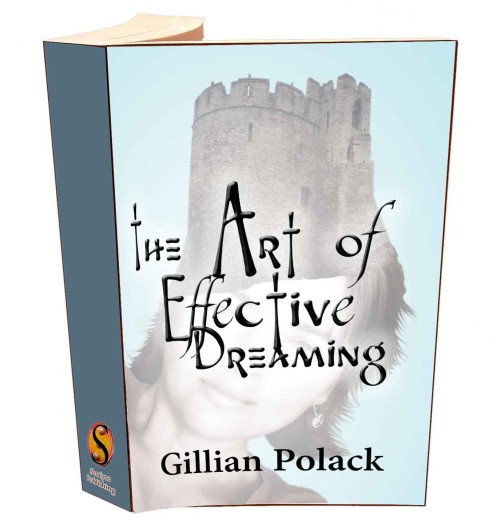
AOEDSample-500x524Last night I had the privilege of launching the new book of friend and colleague Gillian Polack, The Art of Effective Dreaming. This is what I said:

It is April Fool’s Day, and this is no coincidence. As Gillian Polack’s new book so perfectly illustrates – as fairy tales are wont to do – “We shall not grow wise before we learn that much that we have done was very foolish.”[1]

Fiction and reality share one thing in common: each is only half-true. In The Art of Effective Dreaming, Gillian shows that for those who love and lose, for those who love in vain, for those who love in expectation, the sharpest truth is the half-truth, and therein dwells the realm of the fairy tale.

Carved from both our conscious world and our dream world, the fairy tale is where courtship is better than sex, where life sometimes refuses death, and where hope shines stronger than despair. As the book’s protagonist Fay says, “I’m not a big one for reality.” Fay by name and fey by nature, then.

These are some of the things Gillian’s new book teaches us about fairy tales:

  • in a fairy tale people grow old in wisdom rather than years;
  • in a fairy tale it is magic, not rain, that renews;
  • in a fairy tale there are always answers, but the answers you need and not the answers you expect;
  • in a fairy tale beauty is not beauty;
  • in a fairy tale ogres live in houses not under bridges;
  • in a fairy tale homes are gardens and gardens are homes;
  • in a fairy tale being right is never enough;
  • in a fairy tale it’s impossible to keep your balance;
  • in a fairy tale love is always a burden;
  • in a fairy tale love is always a curse;
  • in a fairy tale love is always salvation.

Gillian knows that the fairy tale is first and foremost a folktale, and that the natural accompaniments for folktales are folksongs, folk-dancing and riddles. These are the stories and the songs, the dances and the mysteries, our forebears shared with each other when the weather closed in, the wind and the wolves howled outside the door, and summer was just a memory. They echo in that part of our brain that still sends a shiver down our spine when dark clouds bank on the horizon and the edge of the forest seems a tad too close for comfort.

Gillian also knows that in fairy tales almost everything cradles a surprise. A gentle landscape hides low-hanging branches and foot-snagging rocks. Bridges don’t always cross rivers. The rugged coast hides kelpies as well as selkies. Castles can be traps as well as sanctuaries. Friends are not always friends. Your worst enemy is sometimes yourself.

But, Gillian being Gillian, The Art of Effective Dreaming is so much more than a fairy tale. It is a novel, and like an old river, it is a novel long and deep, and the deeper we delve the darker it gets. While evil gets its due – if not its comeuppance – good also suffers. Indeed, good suffers disproportionately, but who are we to spite the one true connection to our own world?

In this book there is a genuine conversation between author and reader. If this was a play, the protagonist would be constantly breaking the fourth wall. Fay wants to take us by the hand and bring us into her dreaming universe, and as we merge ourselves with her character the border surrounding our own reality starts to blur. The colours of faery bleed into our world, making it brighter, sharper and more perilous.

And that, of course, is what all good story-telling should be about, whether it’s mimetic fiction or science fiction, swashbuckler or fairy tale: the created world must be as vivid and true as the real world.

I unhesitatingly recommend this book to all those who enjoy their stories long and deep. It has followed a sometimes torturous route from concept to publication, and I congratulate Satalyte for having the courage and foresight to publish it against all curses and contrariness. I take great pleasure in announcing that Gillian Polack’s The Art of Effective Dreaming has left the slipway and now is well and truly launched.

[1] Freidrich August van Hayek

16 March 2015: Terry Pratchett

Pratchett on shelf

A section of the family’s ‘Pratchett’ shelf.

Terry Pratchett died last Thursday, 12 March, at the age of 66. I heard the news without surprise but a great deal of sadness. He had been ill for some time.

I’ve been reading his Discworld books ever since 1986 when I stumbled across the second in the series, The Light Fantastic. I was hooked the moment Death, answering a summons by several senior wizards, appeared with a scythe in one hand and with small cubes of cheese and pineapple on a stick in the other.

“I was at a party,” he explained.

Pratchett’s humour, often ironic, frequently hilarious, never cruel, underpinned a fully realised but surreal fantasy universe populated with wizards, giant turtles, vampire soldiers, world-weary assassins, wise witches, evil elves and, of course, Death.

It is sad to think there will be no more Discworld novels. It is even sadder to think the world is now without Terry Pratchett.

06 February 2015: Price-signals

Medicare[This is the second of two articles I wrote during my stint with the South Coast Register, and put up here with kind permission of the editor.]

In light of recent problems suffered by Tony Abbott and the federal Liberal Party (not to mention the state Liberal Parties in Queensland and Victoria), it’s ironic that senior cabinet ministers are arguing the chief problem is a failure to properly explain their policies. They need a better ‘narrative’ to get the message across.

In other words, Australians are stupid for not getting the message the first time around.

The truth is that Australians understood the message very well indeed, and have on the whole rejected it. Taxing and punishing the poor while the rich get off virtually scot-free is not considered fair or workable.

No one denies that measures need to be taken to control government spending.  But as NSW state member for the South Coast Shelley Hancock said, “The Federal Government has to make tough decisions, but these tough decisions are impacting on the poor.”

While Australians ponder possible changes to Medicare that will penalise them for being sick – what the Government calls a ‘price-signal’ – extraordinarily wealthy mining companies such as Swiss-owned Xstrata reap billions in fuel rebates for the privilege of taking our non-renewable resources such as iron ore. To make matters worse, some of these companies produce their own petroleum products. It’s like the Government giving someone money to buy carrots they already grow in their garden.

Xstrata might argue that since their trucks and diggers and earth movers don’t run on publicly funded roads and highways, the rebate on the fuel excise is only fair. But if that argument is solid, people without children should also deserve a rebate for that portion of their income taxed for schools and universities, and people who don’t suffer illness should be able to renege on the Medicare levy.

This is not the only example of our Government’s largesse towards those who need it least.

The Abbott government won power in part because it promised to abolish the carbon tax. While not the most popular Julia Gillard initiative, it at least had the virtue of punishing polluters for polluting – what the current Government might refer to as a ‘price-signal’. Abbott’s scheme to counter climate change, Direct Action, forces Australians to pay polluters for reducing their carbon emissions: in effect, a new tax. This from a government that swore it would not introduce taxes that “are yet another hit on the cost of living of struggling Australian families”.

There are changes the government could make right now that could save them billions in spending – including cutting the diesel rebate to miners, most of them businesses with a majority of overseas’ shareholders, and using cheaper drugs in the Pharmaceutical Benefits Scheme. Just these two actions could save the budget $3.3 billion a year.

It does seem that the present government’s budget plans involve transferring what little wealth we have to those who have wealth aplenty. In effect, we’re being punished for the privilege of not being rich.

05 February 2015: Star Wars VII – a new hope?

star wars

The original new hopers: Mark Hamill, Carrie Fisher and Harrison Ford

Is it a case of too little too late?

When  the original film came out in 1977, I remember reading George Lucas had planned nine sequential stories organised into three trilogies. Star Wars, since retitled Star Wars IV: A New Hope, was the first story in the middle trilogy. When this trilogy ended with The Return of the Jedi in 1983, I hoped Lucas would roll on with the sequels, the third trilogy.

I was never interested in the prequels. Who would want to sit through three films when the end result was already known?

However, my love for Star Wars got me into the cinema to watch The Phantom Menace in 1999. What a mistake. A mistake repeated twice more with Attack of the Clones and Revenge of the Sith. I watched all three from a sense of loyalty to the original and with slowly diminishing hope that Lucas would pull something out of the hat. A good story, maybe.

Now, decades later, the three films Lucas should have started in 1999 are on the drawing board. In fact, the first of the films, The Force Awakens, is out in December 2015. The fact that it’s to be directed by J. J. Abrams from a story by Abrams and Lawrence Kasdan (co-writer with Lucas of The Empire Strikes Back and The Return of the Jedi), suggests this film should have been called A New Hope. I admit to being curious to see what effect Abrams, who was only 11 in 1977, will have on the franchise. Will he rejuvenate it, as he did the Star Trek franchise with his eponymous 2009 film?

Chances are.

However, for me there is a single big but.

But it’s been 38 years since the first film.

To put that gap in perspective, 38 years before the first Star Wars film saw the release of The Wizard of Oz. What if MGM had produced the same pattern of sequels as Lucas did with Star Wars? It would mean the seventh Oz film would have been released in 1977, the same year as original Star Wars. Indeed, if they did what Disney, the new owners of the Star Wars’ franchise, are planning to do, the ninth Oz film would have been released around 1981. L. Frank Baum wrote 14 Oz novels, which conceivably could have seen sequels rolling out until the 90s. In fact, with Gregory Maguire’s 1995 novel Wicked: The Life and Times of the Wicked Witch of the West, they even had a prequel of sorts. A prequel with a good story, what’s more.

So why didn’t MGM produce any sequels? The story was popular enough. There had been three Wizard of Oz films made before the 1939 version, and another was produced in 1982. And film sequels were not exactly unknown. (The earliest I can date was a silent trilogy, all made in 1913, about a female detective called Kate Kirby.)

The sad truth is that ‘The Wizard of Oz’ was not a success at first, recording a loss for the studio. It wasn’t until it was rereleased in 1949 that the film went into the black. Since then, of course, it’s made a motza with repeats on television and sales of videos and DVDs.

Still, I can’t help feeling that The Wizard of Oz I: Wicked, would have been a hell of a more fun than Star Wars I: The Phantom Menace.

Here’s hoping 38 years is long enough for Star Wars to get through its self-reflective, rambunctious, acne-ridden teenage phase and mature into something really worth watching.

04 February 2015: Who is responsible?

overseas workers

Overseas workers leave Manildra’s Bomaderry site with, from left, CFMEU state secretary Brian Parker and reps Dave Curtain and Dave Kelly. Photo courtesy South Coast Register.

[This is one of two articles I wrote towards the end of my three-week stint as a casual journalist with the South Coast Register in January. The editor decided not to use either of them and has kindly given me permission to put them up on my blog. This story was written on Monday 26 January, and although there have been minor developments since then, they do not in my opinion answer any of the questions I raise. An official government investigation by the Fair Work Ombudsman is still underway.]

The most contentious question about the discovery of 29 seriously underpaid overseas workers on the Manildra-owned site in Bomaderry and who lived in appalling conditions in south Nowra, is this: who is responsible?

The best candidate is Chia Tung, a Taiwanese-owned company.

According to Alan Sinclair, who represents Chia Tung in Australia, the Taiwanese company was responsible for employing the workers, their contracts, and the conditions under which they lived.

“Instructions and directions come from Chia Tung,” Mr Sinclair told the Register.

While Mr Sinclair’s claims may be true, he cannot so easily brush away his own responsibility as the company’s local representative. Why wasn’t he on top of the situation? Why wasn’t he aware – at the very least – of their living conditions in what effectively was a dosshouse?

We wish we could ask him, but last we heard he is only speaking through his lawyer.

And guilty at the least of being delinquent in the supervision of its own site is Manildra. Despite the fact that 29 workers were building a pellet feed mill for that company, their initial response – given to us by a local politician who had been in touch with Manildra executives – is that the responsibility belongs with the company contracted out to supply and install the structure.

Despite repeated attempts by the Register to ask Manildra questions about the issue, their only official comment is that they are taking the matter seriously and “are making enquiries of Chia Tung as to the allegations.”

Allegations? The workers’ contracts and living conditions have been sighted by the Register. After five days, surely any information forthcoming from Chia Tung would have been collected, analysed and absorbed, and a full response released to the media?

The Register has also attempted to contact the ministers responsible for the departments of Employment and Immigration and Border Protection: Eric Abetz and Peter Dutton, respectively.

On Friday 16 January, only five days before the Register broke the story, Eric Abetz said, “Contrary to some media reports, workers on 457 visas are not a low cost option to avoid the costs of employing Australian residents.”

Well, contrary to his ministerial opinion, workers on 457 visas are being used as a low cost option to avoid the costs of employing Australian workers. Despite repeated requests from the Register for a comment in light of recent developments, we were informed that one would be coming from the office of Senator Michaelia Cash, the Assistant Minister for Immigration and Border Protection.

While no comment has yet been received from the office of Senator Cash, we have discovered a media release from her office dated January 9 concerning a “substantial fine recently imposed against a Launceston takeaway.”

The takeaway was fined a total of $100,000 for underpaying its Chinese chef by $86,000 over four years. Given the business the chef must have generated over those four years, not to mention the savings in not paying $86,000 in wages, the government’s “substantial fine” barely registers as a slap on the wrist, and hardly a discouragement for other businesses contemplating doing the same.

The official reply to our enquiries from the Department of Immigration is that the department is investigating the matter and “appropriate action” would be taken if a sponsor was discovered to have failed its obligations. Appropriate action could vary from imposing “administrative sanctions” to “applying to the federal court for a civil penalty order”.

South Coast Labour Council secretary Arthur Rorris said the issue illustrated the gap in the compliance and policing of Australia’s industrial and workplace laws.

“The federal government is so obsessed with restricting the activities of trade union members that they are missing the main game – that this gap creates the environment where the alleged conditions for the 29 overseas workers can exist,” he said.

“What happened at the Manildra site tells us some employers can get away with almost anything, and they believe the federal government will do their dirty work by tying the hands of trade unions which otherwise would be in a better position to uncover these sorts of abuses.”

The reply the Register received from the Department of Immigration also stated that the matter had been referred to the Fair Work Ombudsman. When asked for a comment, spokesperson for the FWO replied that indeed the matter was under investigation, but because it was operational it was not appropriate to comment further.

Fair enough.

But is it fair enough that three senior government politicians, Eric Abetz, Peter Dutton and Michaelia Cash, cannot after five days issue a single pertinent comment? If they are not responsible for their respective portfolios, who are? And can the Register please have their telephone numbers?