Miscellaneous

16 April 2024: Dancing Queen

From the Wahiba Sands in Oman to penguin-covered ice sheets in Antarctica, notable events in Aiyana Zinkand’s life have been accompanied by one song, a song that no matter the location, the circumstances or the sheer unlikelihood of there being any music at all, inevitably emerges like a cicada in summer.

ABBA’s 1976 Europop hit ‘Dancing Queen’.

Aiyana Zinkand, Vientiane. Photo: Simon Brown

‘The crazy thing?’ Aiyana says. ‘I can’t stand ABBA – I’m more of a Black Sabbath and Cream fan – and even though “Dancing Queen” came out the year after I was born, it is everywhere.’

In 2016 she was on a camping safari in Borneo with friend ‘Irish’ Katie. They stopped at a cinder block camp somewhere on the border between Malaysia and Indonesia. There was no electricity but plenty of rats. The safari staff provided the entertainment in the Orangutan Irish Bar, basically a jungle football pitch decorated with Chinese and American flags.

‘We were sitting there, literally picking off leeches as we drank warm beer, when one of the Malaysian workers picked up a moisture-sodden and out-of-tune guitar and started playing ‘Dancing Queen’.

‘It was hard to pick out exactly what he was singing because he barely spoke English, but I knew it was “Dancing Queen”. No one else figured it out until the final verse.’

#

Aiyana was born in Baltimore, Maryland. Family dynamics were tricky, and she grew up in Maryland, Michigan and Florida.

‘I was a good kid. Stole a police car once, but otherwise I’ve always been on the straight and narrow. Hard working and very sporty.’

Aiyana’s sport of choice was ice hockey.

‘I was a rep player, but because I was a kid couldn’t play professionally. I hoped to pick up a university sports scholarship and go down that line.’

But then, when visiting her father and grandparents in Florida, she was involved in a car accident.

‘I broke ribs, an ankle and knee cap, and dislocated a few vertebrae. There goes my illustrious sporting career.’

#

‘I’ve been travelling all my life, and I’ve heard “Dancing Queen” in a least 30 different countries,’ Aiyana says. ‘That song is everywhere. And everyone knows it.’

The first time she remembers hearing it as the background musical motif to remarkable events in her life was in a karaoke bar in Budapest around 2005.

‘I was working on the thesis for a master’s degree in economics. I got a grant from the Smithsonian exploring postwar reconstruction in Eastern Europe, comparing cities that had concentrated on either cultural or commercial development. But to make enough money to live and travel on I also worked as part-time chaperone for German students on cultural trip through middle Europe: Germany, the Czech Republic, Hungary and Austria.

‘I was meeting up with them in Prague. It was a cold miserable night with a blizzard howling outside. I got to my accommodation about 10.00 pm, resulting in being yelled at by the landlady for being so late. Her husband handed me a huge key ring with lots of keys on it; I didn’t quite get what they were all for because the man was drunk and I could barely understand him.

‘It turned out my room had been given to someone else, and the room I’d been given instead had no bathroom of its own, hence all the keys. Anyway, I didn’t really know any of this at the time and went to what I thought was still my room, opened door to the bathroom … and there was a naked woman there. She screamed. I screamed. We all screamed.’

After things calmed down and they sorted out who had which room, they got talking. The woman’s name was Susanna. She was Spanish and married to a Swiss banker.

‘She was running away from her husband and using his credit cards to spend all his money. The only things she had with her were a red hat box, a fur coat and a crate of Dom Pérignon. Her plan was to live the high life until her husband realised what she was doing and cancelled the cards, whereupon she would divorce him.

‘She had no transport of her own, so we did a lot of driving around together. Then we hit Budapest. More blizzards. We found an underground karaoke bar that played crappy hits from the 70s and 80s. Then it happened. Susanne started singing “Dancing Queen”.’

#

When she finished school, Aiyana moved to California. To keep body and soul together she did 27 different jobs.

‘At some point I found myself doing legal research work for an environmental lawyer. This is about the time things were really starting to happen for long term environmental issues. I was still bartending at night and serving coffee in the morning. But I was good with numbers and eventually worked fulltime with this lawyer. He paid bonuses in the form of college classes in economics, business, math – stuff related to his business. I became his financial forecaster for projects he was handling.

‘I earned a degree in economics in 2005, one class at a time, and became an expert in my field: RFPs – Requests for Proposal – where the state and federal governments put out tenders for work. So I ended up working for both the government and the private sector.

‘The work was intense. At one point I had projects running simultaneously between Sudan, Kuwait, Argentina and Alaska. At the time I was living in Washington, D.C., and had calls coming in every 45 minutes, 24 hours a day.

‘So here I was working with international budgets, forensic accounting, travelling and kind-of-living in Ethiopia, Sudan and Afghanistan while doing work for the UN …

‘And I burnt out.’

#

‘On one trip I was on an Argentinian ship on my way to Antarctica – work to do with base consolidation – and the captain manoeuvred us close to the ice shelf so we could look at some penguins. To set the mood, for whatever reason, he put a song on the intercom.
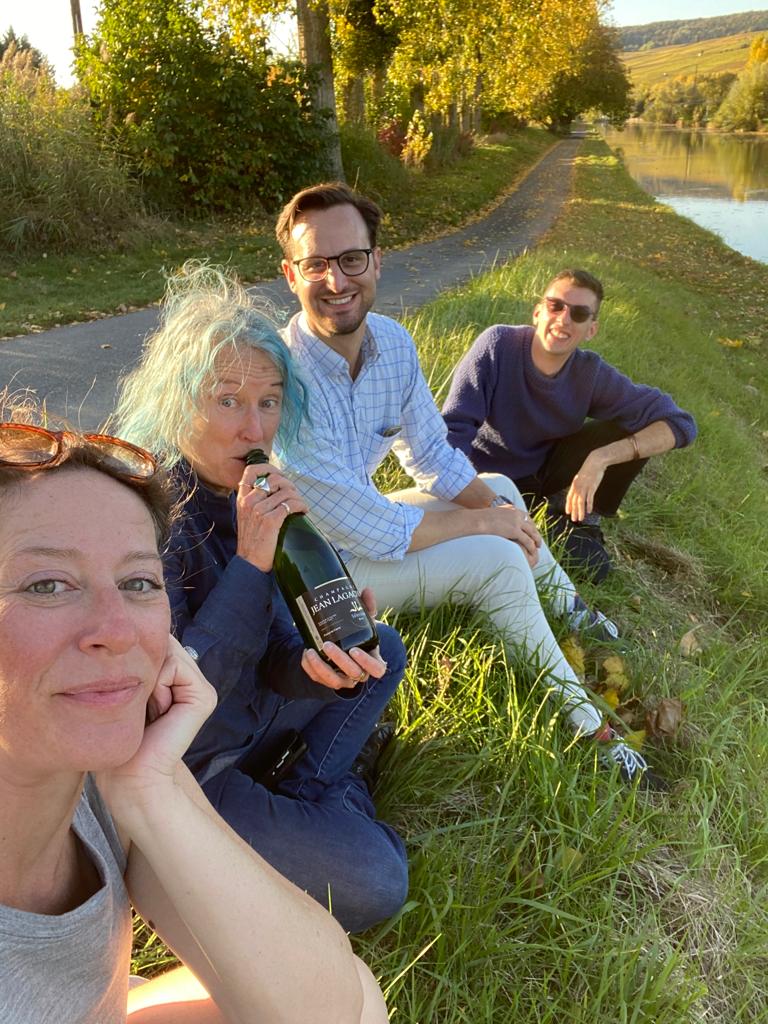
With friends at Aÿ, France. Photo: Aiyana Zinkand

‘You guessed it. “Dancing Queen”.’

Aiyana stresses that sometimes the song was part of normal, even exuberant, events in her life.

‘I remember being in Aÿ, France, with my best friend, drinking champagne and singing “Dancing Queen” at the top of our lungs. This is just one week after leaving Qatar and one day after hearing the song while watching firemen celebrating the start of summer by leaping naked into a canal during the Boat Festival in Leiden. And I heard it recently at the Garage Bar in Vientiane, looking out at a sunset on the Mekong River.

‘So the song’s associated with good events, not just bizarre ones.’

#

Aiyana says it wasn’t just the sheer amount of work alone that got her down.

‘Increasingly, I wanted to do something that honoured my Quaker religion, rather than dealing among other things with the military and weapon contracts, something that started after 9/11.

‘One of the tipping points was when I was involved in final negotiations for a contract dealing with a Senate oversight committee. We were sequestered in a hotel for the duration, which ended up being about 10 weeks. The day we were released I came out of the air-conditioned hotel smack into a heat wave none of us had any idea was going on. It was 109oF.

‘Living like this in my 20s and 30s … well, my life was disappearing.’

She said she had friends who were international teachers who actually ‘lived’ in the places they worked, who interacted with local people and local culture and history.

‘I was visiting one of these friends who taught in Dakar, Senegal. By that time I was thinking about switching from economics to mathematics, which had really started to fascinate me, and career-switching to teaching. It was New Year’s Eve. Fireworks like I’d never seen before. And, of course, running in the background, “Dancing Queen”.

‘I told my friend about my changing interests, and she immediately shouted out to her boss that I wanted to become an international teacher specialising in mathematics. He told me that with my experience – if I got teacher qualifications – a school like his would snap me up.

‘So that’s what I went and did.’

#

The Ikki Woo Woo Tiki Beach Bar. Photo: Aiyana Zinkand

Every year, Aiyana used to take her dad to Ikki Woo Woo’s Tiki Beach Bar at the Thunderbird Hotel on Treasure Island in Florida, on the coast of the Gulf of Mexico.

‘One time we were there my dad heard “Dancing Queen”. Infuriated, he stood up and shouted: “Fuck Abba!”

‘He then walked off into the sunset, ramrod straight, without his walking cane.’

#

Aiyana did her teaching degree in the US between 2010-2012, ending with her second masters.

‘So I changed my life and became a teacher. I lived and taught in Qatar, and then the Netherlands, and now I teach mathematics to students at the Vientiane International School in Laos.’

#
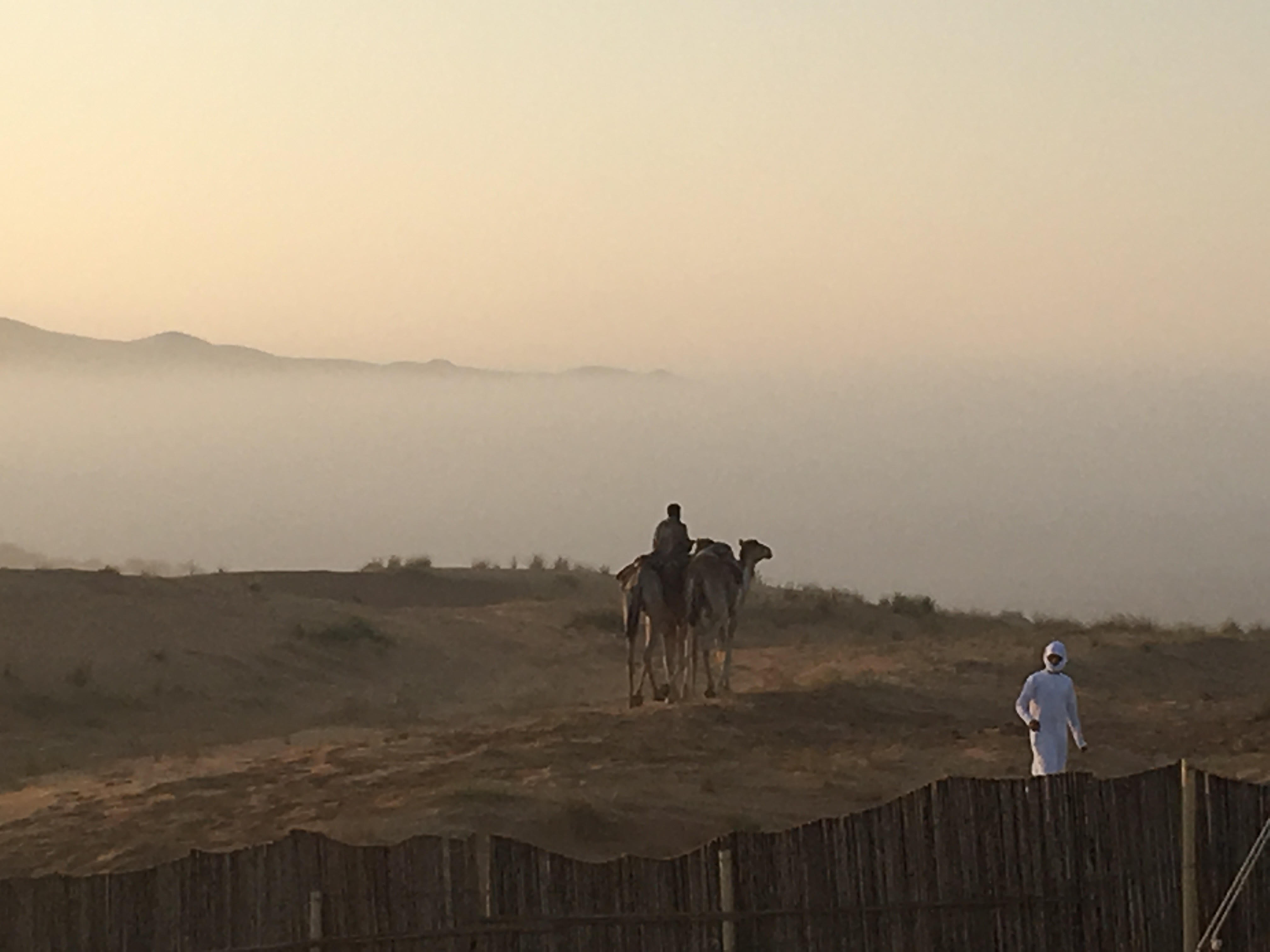
Wahiba Sands, Oman. Photo: Aiyana Zinkand

Aiyana was holidaying in Oman as a last hurrah before leaving the Middle East to live in Europe, and camping in the desert at Wahiba Sands.

‘I got up early so I could watch the sunrise over the desert – one of my favourite things to do. It was 5.00 am.

‘Then I hear it. What the fuck? In the distance I see a camel herder with five camels and a boombox on one shoulder, and blaring out of the boombox was Abba’s “Dancing Queen”.

‘Figures.’

13 February 2024: Magnificent Maddie’s Modern Nativity Story for Young Australians

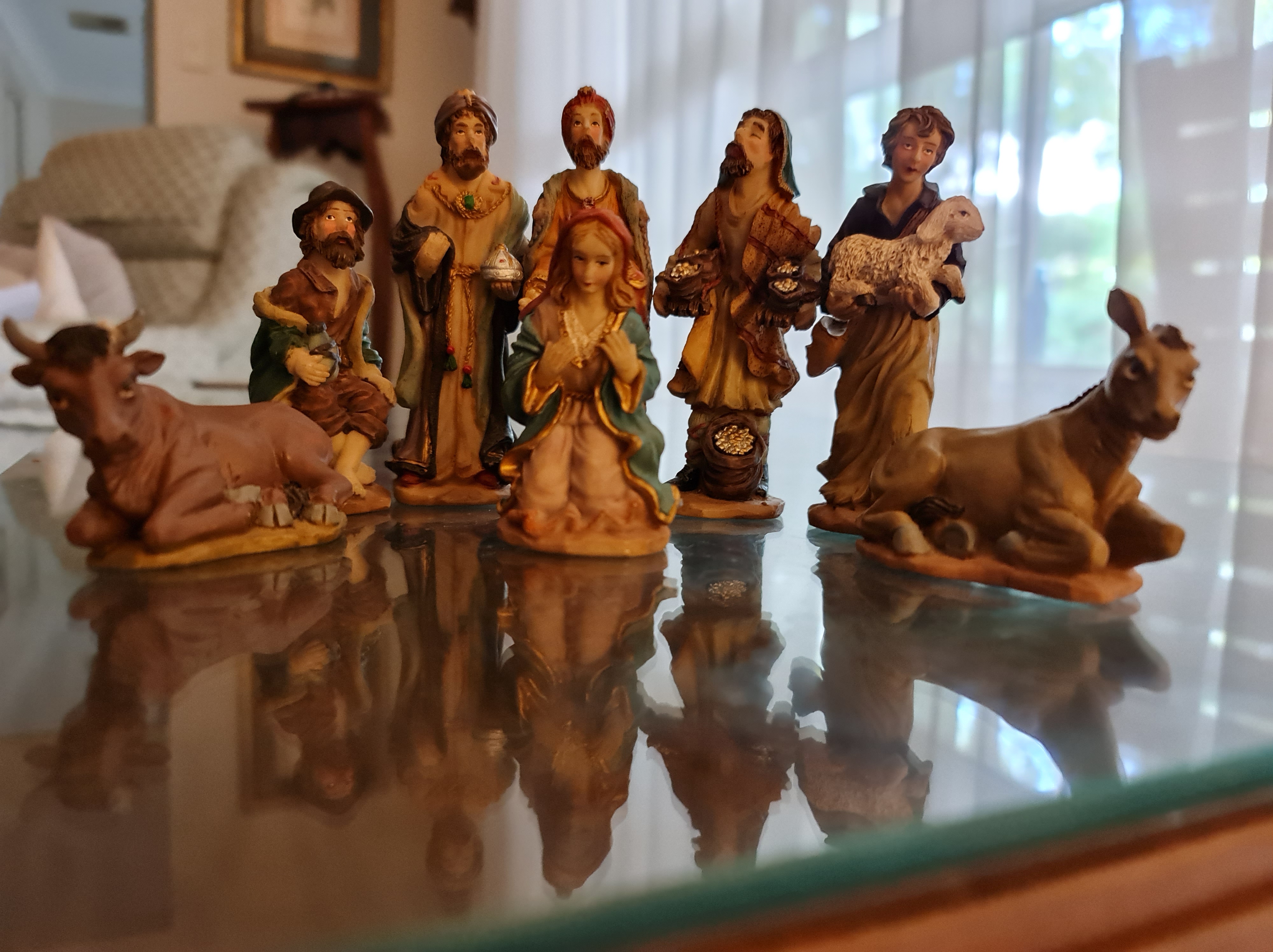
(Four year old Maddie was playing with her great-grandfather’s collection of nativity figures. While possessing some familiarity with the original story, she also possesses a vivid and excellent story-telling  imagination. This is her version of the nativity as recounted to a spellbound and somewhat gobsmacked audience of great aunties and uncles.)

So, Maddie says …

Joseph, Jesus kidnapper.

Just before guests arrived to see the new baby Jesus, everyone in the manger is sleeping. While they are sleeping, Joseph (looking particularly villainous) kidnaps Jesus and takes him to a dark cave.

The Popcorn Man.

When Jesus’s mother, Doreen, wakes up and can’t find him she knows he’s been kidnapped. She also knows who must had done it, but she needs help to rescue him.

Fortunately for Doreen (and Jesus!), just at that moment the King arrives with the Popcorn Man, and they agree to help rescue Jesus.

Team Doreen ready to spring into action

(Pause in story here as one of the audience members rudely interjects with a question: ‘Why is he the Popcorn Man?’ Maddie [looking at audience member as if he’s an idiot]: ‘Because he feeds Jesus popcorn!’[i] Well, duh … )

Team Doreen having a well-deserved rest after rescuing Jesus.

Together with the King, the Popcorn Man, an additional visiting king, a small army of shepherds, a flying cow and a flying donkey, Team Doreen rushes to the cave and takes Jesus back from the outnumbered Joseph.

A little while later, Jesus once again safe in his crib in the manger, the King kisses Doreen. The Popcorn Man, the spare king, and the shepherds all join in.

That done, and after a very exciting but tiring nativity, everyone lies down to get some more sleep before cohabiting happily ever after.

THE END


[i] For those of you unfamiliar with the symbology associated with the ancient art of making and selling popcorn, the Popcorn Man is often portrayed as one of the Three Wise Men (or Three Kings) who visit Jesus in the manger, particularly the one carrying a small chest or chests of golden popcorn, often mistaken for gold coins in our more venal times.

12 February 2022: Interregnum

Apologies to everyone for the long interval between blogs.

Over the last six months, AJ and I moved from Johannesburg, South Africa to Vientiane, Laos, travelling via Australia to catch up with family and friends. Because of the Covid 19 pandemic and its associated lockdowns, quarantines and interrupted international travel, this has been a long, long process.

As well, I’ve been planning on working on a major piece on human evolution for some time, something I’ve slowly – and somewhat painstakingly – put together over the last 10 months. The piece is based on a book a friend, palaeoanthropologist Colin Groves, and I were writing together. From the short few chapters we managed to write before his death in 2017, from memories of our many weekly conversations, and from subsequent conversations with his wife Phyll and colleague Debbie Argue, that piece is now all but done. Although nowhere near as comprehensive as the book would have been, it’s still far too long to be viewed in one go, and will appear on this blog over the next few weeks in six sections.

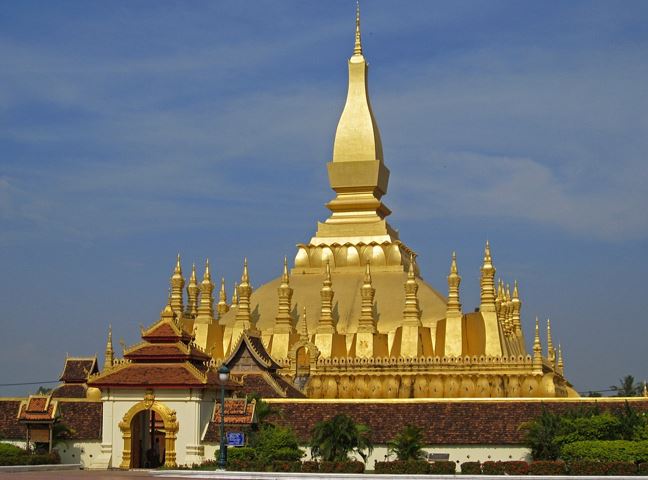
Pha That Luang, Vientiane. Photo: courtesy of Creative Commons (photographer unknown)

Almost as a counterpoint to thinking about human evolution – dealing with relatively deep time – I’ve also been thinking about more recent human history, something spurred on by the pandemic, as well as crises in the Ukraine and the West’s fumbling, erratic handling of the inevitable rise of China. In the process, I came across this short piece I wrote for a workshop two years ago, arguing that the Napoleonic War (or perhaps more accurately, wars) were an essential ingredient in the making of the modern world.

So here it is, the first in what I hope is a much more regular series of blogs.

Napoleon and the modern world

I know … boring Euro-centric, male-centric, and military-centric history. Not really history at all, at least not as its understood these days. But still, the effects of this long conflict did two things that helped establish the world we now live in. First, it saw the creation of the most dominant modern European states. Second, it led to the rabid drive to colonise and exploit Africa.

The so-called First World War – the Great War of 1914-18 – was no such thing. The first true world war was the Seven Years War and occurred in the 1750s . It was fought in Europe, the Mediterranean littoral, west Africa, North America, southern Asia and the Philippines. The Napoleonic War was more of the same – the Second World War, if you like – but with extra countries thrown in and fought on a much more massive scale: bigger armies, bigger battles, greater civilian casualties and dislocation, and huge fleets of giant wooden ships sailing across all seven seas.

Artist: Paul Delaroche. Photo courtesy of Creative Commons (photographer unknown)

One thing you have to say for the Europeans, when they throw a party they make sure everyone’s invited, whether they want to join in or not.

The Napoleonic War involved military, economic and social mobilisation on a scale never seen before. Just two examples: between 1805 and 1813, Napoleon conscripted over 2,000,000 soldiers, and by the end of the war British national debt reached 200% of GDP.

Of course, Napoleon was a megalomaniac, but he also introduced dramatic reforms or consolidated reforms brought in by the French Revolution. Just three examples: the legal system, the Civil Code, influenced similar codes throughout Europe; the metric system is now used almost universally; and state-sponsored voyages of scientific discovery.

The Napoleonic War entangled the US in its first international conflicts: first against the French themselves (their previous ally during the American Revolution), and then, in 1812, against the British (their previous opponent during the American Revolution).

Prussia’s success resisting the French during the war cemented its position as the leading German-speaking country – a process begun 50 years before under Frederick the Great – leading to the creation of the German state itself under the direction of the Prussian Bismarck.

It’s hard to measure to the last centimetre or the last centime or the last degree Celsius the effect all of this had on the rest of the world. But when we talk about nation states, modern economies, science, art, culture and yes, even history, we are dealing with many ideas that had their origin or first great flowering during the Napoleonic era. When the wars were finally done, the continent of Europe – exhausted and battered and Napoleon sent to his last exile on St Helena – experienced nearly a century of peace, something that had never happened before. Instead European states competed with each other overseas, most dramatically in the race to colonise Africa during the 1800s.

The raw materials of the modern world can be found in early European colonialism and 18th century industrialisation, but for all its benefits we enjoy and all its crosses we bear, it was forged during the Napoleonic War.

10 January 2019: A tale of unrequited love

dsc01509 (2)

Southern masked weaver in our back yard, Johannesburg

What follows is a tragedy. Admittedly, a minor tragedy in the scheme of things, but one that played out in front of AJ, our daughter and myself at our home in Johannesburg just after Christmas. It involves a hardworking bird called a southern masked weaver and its failed attempt to win a mate.

Weaver birds, as their name suggests, weave intricate nests. They are a family of birds mostly native to sub-Saharan Africa, with some species living in tropical Asia.

According to Weaver Watch, one of their number, the red-billed weaver or red-billed quelea, ‘ …is one of the most abundant bird species in the world and its post-breeding population has been estimated to be 1.5 billion birds, leading to its nickname “Africa’s feathered locust”’. Since it readily eats crops, this makes the red-billed quelea a serious threat to subsistence farmers.dsc01471 (2)

Most weaves, however, are harmless. They are beautiful birds, small and compact, and during mating season (September to January) the males are brightly coloured, brilliant architects and hardworking builders.

Since arriving in South Africa six months ago, AJ and I have admired weavers and the intricate nests they make, and were planning to build a feeder and bird bath to attract to them to our home. Then to our surprise, on Boxing Day, AJ and daughter (visiting from Australia over Christmas) noticed a southern masked weaver starting a nest hanging from a branch about halfway up the jacaranda in our backyard.

In fact, by the time we noticed its existence the nest had already been started: the first central ring of long fronds had been weaved together, and an inner lining of fern (or possibly jacaranda) leaves laced in to help make the nest more comfortable.

As we watched over the next two days, the weaver worked virtually non-stop on building the new home. Its skill, agility and determination were remarkable, and the product of its labour a thing of beauty. I wouldn’t be surprised if our distant ancestors learned to weave from watching these little birds at work.dsc01478 (2)When the male has finished building the nest, a female flies in to assess its suitability. While the male of the species is a brilliant architect and hardworking builder, the female is a severe critic and, occasionally, expert demolisher. If she doesn’t like the nest, she will often tear it to pieces; the male will then start again, or choose another location to build a completely new one.
Three days after first noticing the nest in our jacaranda, we left home for most of the day. When we returned, the nest was gone, its ruins laying on the lawn below the tree. At the time AJ theorised it was a young male, new at the game, and a female had let it know in no uncertain terms that its efforts weren’t good enough. But then we remembered that there had been a brief but violent storm while we were out, and it seems likely this was what brought down the nest.dsc01537 (2)

Sadly, we didn’t end up with a happy couple residing in our backyard and raising a new brood of southern masked weavers. On the plus side, male weavers usually build a series of nests; we can only hope our male successfully found at least one female willing to put up with his efforts and share with him a clutch of eggs.

06 November 2014: Dragonflies

Sp. unknown (pos. Neurothemis fulvia?). Photo: Simon Brown

Sp. unknown (pos. Neurothemis fulvia?).
Photo: Simon Brown

Small blog on dragonflies. Just because.

And because they are incredibly beautiful. And because they are incredibly ancient, among the first flying insects. Extinct proto-dragonflies, sometimes called griffenflies, could have up to 70cm wingspans. They lived from the late Carboniferous to the late Permian.

Dragonflies are also the fastest insects, and can fly backwards, which is pretty cool.

Also I’ve got this photo I took in Phuket. Not quite a griffenfly, but pretty nonetheless.

05 November 2014: Alim Khan

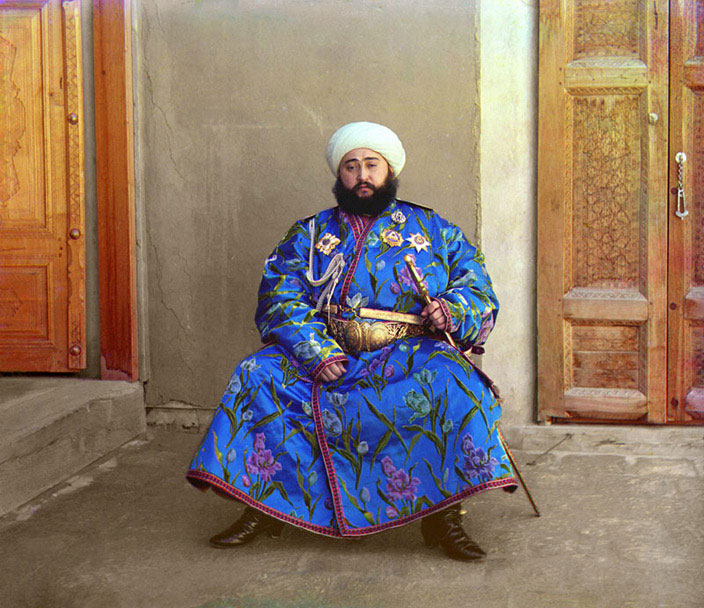
Emir of Bukhara c1910Meet Emir Said Mir Mohammed Alim Khan, the last emir of Bukhara. He looks rather splendid in his elaborate coat with its startling blue silk cloth with embroidered flowers and leaves. Then there’s the gold belt and, one suspects, quite functional sword. Above it all, however, rests the serene and confident visage of Alim Khan himself. He led an extraordinary life, and was the last direct descendant of Genghis Khan to rule a nation.

I say “was” because this extraordinarily clear and colourful portrait we have of him was taken in 1911, when Alim Khan was around 30 years old. He had just taken over the reins of power following the death of his father the year before.

The photograph was taken by Sergey Prokudin-Gorsky. With the support of Tsar Nicholas II, he spent six years travelling around the Russian Empire to document its people, its geography and its cultures.

The US Library of Congress has a wonderful collection of Prokudin-Gorsky’s photographs. The latest were taken just after the start of WWI, and only two years before the revolution which ultimately deposed Alim Khan from his throne.

Alim Khan died in Kabul, Afghanistan in 1944. His old emirate now lies within the borders of Uzbekistan, once part of the Soviet Union and now an independent republic.